Corona virus has already become a serious factor in our daily lives and will remain so for months to come. We are taking every possible precaution in our practice to avoid exposure to/and spread of the virus. Here are the preventative steps we are taking:
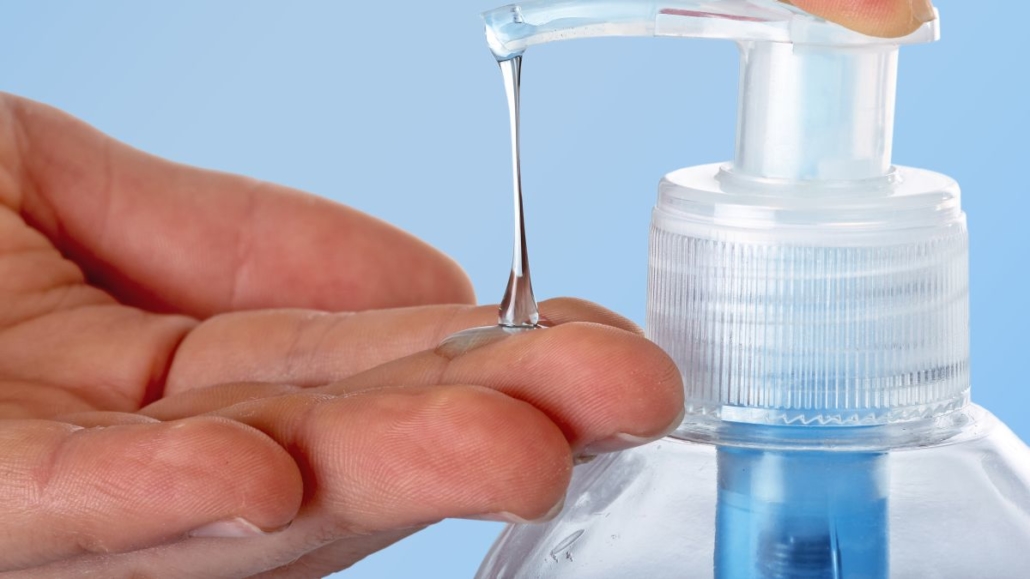
It is well documented by now that alcohol based disinfectants (over 60 percent alcohol) are very effective in eliminating the virus in contact scenarios-by the time the disinfectant dries the virus is dead. We are using medical grade disinfectant typically used in I.C.U facilities at our practice.
Any patients with flu-like symptoms are respectfully disallowed from entering the premises.
All patients are requested to disinfect their hands immediately on entry to the premises.
Shaking hands is discouraged.
In the treatment room Dr.Greyling disinfects the headrest area completely in front of the patient allowing it to dry.
Two layers of face towel are placed over the disinfected head rest.
Dr.Greyling lastly disinfects his own hands (again) in front of the patient before commencing with the treatment.
Some treatment techniques are adapted to avoid any breathing directly onto one another.
Dr.Greyling wears surgical gloves during any treatment requiring facial contact.
Dr.Greyling disinfects his hands straight after treating every patient as well.
The treatment table is thoroughly soaped down and washed every day.
Dr.Greyling will of course remain open as we closely montior developments regarding coronavirus.Your health and safety remains our highest priority while we continue with your required treatments. Written by Dr Etienne Greyling
https://drchiro.co.za/wp-content/uploads/2020/03/set-of-black-man-washing-hands-isolated-on-white-A9F3MX7.jpg43026807Yvettehttps://drchiro.co.za/wp-content/uploads/2018/03/logo-home2.pngYvette2020-03-19 18:05:362020-03-20 07:06:30WE ARE TAKING EVERY POSSIBLE PRECAUTION IN OUR PRACTICE TO AVOID EXPOSURE TO/AND SPREAD OF THE CORONA VIRUS. HERE ARE THE PREVENTATIVE STEPS WE ARE TAKING:
Researching conditions on the internet often throws concerned parents into a panic-stricken frenzy. Very often they will focus on the heading and not necessarily the content of the entire article. Medical articles will repeatedly make use of catch phrases such as ‘research has shown’, ‘there is a correlation between’ or ‘evidence based’ -when on closer inspection the article reveals very low percentages involved. Many are not definitive -the same is very much true for hereditary spinal conditions.
The frustrating thing about these articles is the massive variation between the findings with some claiming a negligible hereditary influence and others claiming substantial percentages for certain conditions. However, a common line of conclusion persists throughout all the research -and that is:
JUST BECAUSE A PARENT SUFFERS A CERTAIN SPINAL CONDITION, IT BY NO MEANS GUARANTEES THEIR CHILDREN WILL SUFFER THE SAME! ALTHOUGH THEIR CHILDREN MAY BE SUBSTANTIALLY MORE PRONE TO THAT CONDITION-THE AVERAGE INCIDENCE PERCENTAGE USUALLY INDICATES THAT THEY WONT! (INHERIT THE PROBLEM).
The goal of this article is not to deny the fact that certain spinal conditions are hereditary, a large percentage PARTIALLY ARE…on the contrary the goal is to embrace it, to be proactive about it! TO CONTROL THE CONTROLLABLES:
Much research has been directed into the field of epigenetics which proposes that the expression of our genes actually changes throughout our lives as certain genes are activated /or turned off. Epigenetics studies the role of our environment in this process. Three examples of these environmental influences in a spine genetically prone to for eg. a scoliosis are: •PHYSICAL-where the spine may adapt to maintain function rather than form (as in a reactive scoliosis around a bad habit/injury).
•EMOTIONAL-where muscle spasm due to acute/chronic stress may cause asymmetrical muscle use pulling structures out of correct alignment.
•CHEMICAL-this includes your diet and nutrient intake for strong bones and ligaments etc. Conversely heavy metals such as mercury and chlorine have a negative effect on your ligaments- making them too loose (triggering a scoliosis in a prone spine etc). Even though prone to it, the above mentioned spine may never have manifested the scoliosis if those influences were avoided!
If as a parent you are aware that you have a certain spinal condition, then influence your child’s environment as much as possible to avoid the same for them, for eg: •If you are an arthritis sufferer, curb their sugar intake, monitor their weight, encourage regular exercise! •If you suffer osteoporosis ensure your children (daughters especially) get into the lifestyle of good calcium and vitamin d intake, monitor weight, stay properly hydrated, encourage exercise and avoid them developing caffeine/nicotine habits. •With a history of scoliosis or degenerative disc disease, again, monitor your children’s weight, avoid excessive heavy metals in their diet, get them into exercise /strengthening protocols specific for their potential condition. •These are all good lifestyle habits anyway and can do no harm even if the children were never to develop the same condition anyway!
Start your children’s spinal screening early, get advised and guided regarding the above by your Chiropractor-don’t attempt to make it up as you go. Certain conditions have specific environmental requirements and certain contra-indications!
Whatever the spinal condition you suffer as a parent or the ‘hereditary percentages’ involved, the full manifestation of the condition or at best the condition itself may be averted by positively influencing your children’s spinal environment. Speak to us, we have your back! Written by Dr Etienne Greyling.
https://drchiro.co.za/wp-content/uploads/2020/03/family-having-fun-in-the-park-82F43S6.jpg40046000Yvettehttps://drchiro.co.za/wp-content/uploads/2018/03/logo-home2.pngYvette2020-03-13 07:44:502020-03-13 11:07:50JUST BECAUSE THERE IS A HISTORY OF BACK PAIN AND SURGERY IN YOUR FAMILY DOES IT MEAN YOUR CHILDREN WILL SUFFER THE SAME PROBLEMS?
Here are the pointers on how to achieve a painfree cycling lifestyle:
The five golden rules of a good cycling posture are:
1)FOOT POSITION: •The ball of the foot should always be aligned over the middle of the pedal(cleat) and facing absolutely forwards.
2)SEAT HEIGHT: •with your pedals aligned vertically, and with your HEEL on the lower pedal your knee should be fully extended. When the BALL of the foot is placed on the pedal in this position the knee should then be slightly flexed (when the foot is the correct position as in point 1).
3)SEAT POSITION: •With the pedals now placed in a horizontal position, the knee cap of the front leg should be directly over the pedal centre (a plumb line with the ball of the foot).
4)NEUTRAL LUMBAR SPINE: •Angle the pelvis forward at the hips to achieve a neutral lumbar curve. This neutral lumbar curve is more or less midway between maximal lumbar flexion(hunching) and maximal lumbar extension (hollowing) of your lumbar spine. This position and a strong core will help you achieve maximal power output in the hips.
5)HANDLEBAR HEIGHT: •Raise the handlebars to the height where you can comfortably achieve and maximize the previous pointers whilst still keeping the elbows slightly flexed (for shock absorption).
Getting any of the above listed protocols wrong will invariably result in injury!
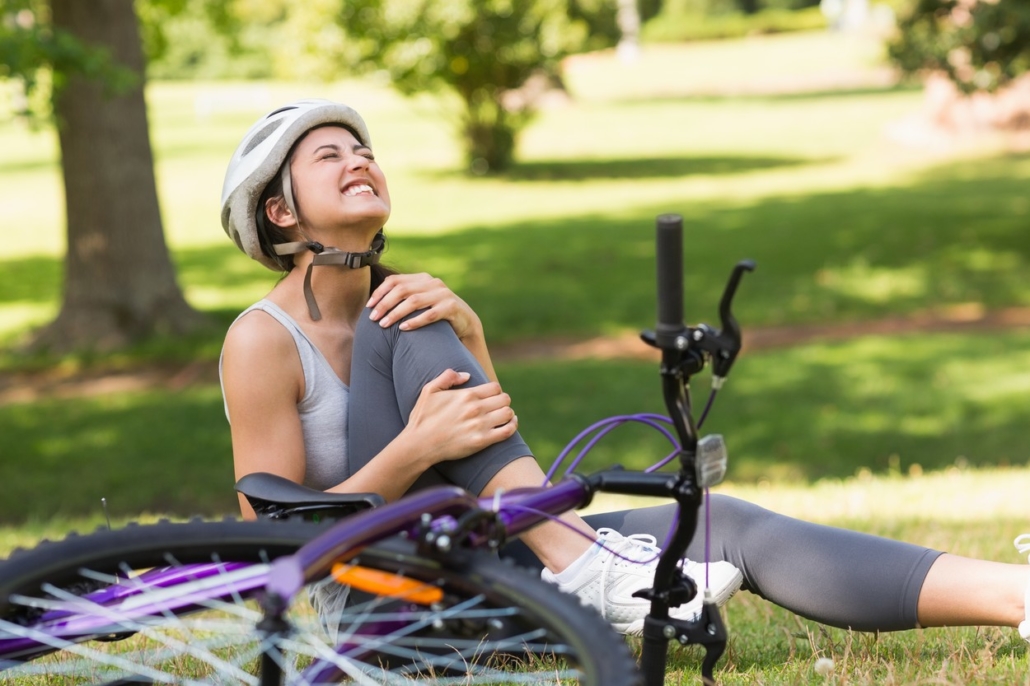
Some of the more common cycling injuries seen in Chiropractors’ rooms are:
1)INCORRECT FOOT POSITION ON THE PEDAL/CLEAT: •Results in anterior knee pain and achilles tendinitis etc. •If the foot is not facing absolutely forwards and is rotated inward or outward, conditions such as Iliotibial band friction syndrome(ITB) or hamstring tendinitis occur.
2)INCORRECT SEAT HEIGHT: •Too high or too low a seat causes excess lumbar spine strain, pain and dysfunction. •Neck pain and dysfunction occurs with the seat set too high due to the excessive neck extension necessary when looking up. •Hamstring tendinitis or ITB also results from the seat being set too high due to the extra ‘reaching for the pedals’ stress placed on those structures.
3)INCORRECT SEAT POSITION: •A seat too far forward will take your body ahead of the ideal power axis placing excess strain on the knees/hips/lower back causing pain and dysfunction there. •A seat too far back will take your body behind the ideal power axis cause a ‘reaching for the handlebars’ posture also placing strain on knees/hips/lower back and forcing the neck into excessive extension-causing pain.
4)INCORRECT PELVIC/LUMBAR ANGLE: •A lumbar spine outside of the above mentioned NEUTRAL position will result in excessive strain on all spinal structures causing lumbar pain and dysfunction. •Lumbar spine disc injuries are especially common in cyclists with excessively rounded (hunching) postures on the bike.
5)INCORRECT HANDLEBAR HEIGHT: •Too high or too low a handlebar causes extra stress on the lumbar spine causing pain and dysfunction . •Too low a handlebar forces the neck into excessive extension when looking up causing pain and dysfunction. •Handlebars set too low cause extra weight translation forwards and extra pressure on the wrists -this results in conditions such as tendinitis at the wrist/carpal tunnel syndrome etc.
On long rides always take the time to do regular ‘cervical decompression stretches’ by touching the chin to the chest briefly. This reduces the cumulative extension pressure on the neck from constantly looking up. Please choose your timing to do so carefully on non-technical sections and always keep your eyes on the road while doing so!
Hopefully this will assist you in enjoying a painfree cycling lifestyle.If however you still suffer any of the above or extended conditions despite adhering to the advised protocols -it’s probably time to see your neighborhood Chiropractor!
Written by Dr Etienne Greyling.
https://drchiro.co.za/wp-content/uploads/2020/03/Add-a-subheading-5-1.png788940Yvettehttps://drchiro.co.za/wp-content/uploads/2018/03/logo-home2.pngYvette2020-03-06 11:22:352020-03-06 11:43:41THE INJURIES COMMONLY ASSOCIATED WITH CYCLING ARE EASY TO AVOID