CHIROPRACTIC TREATMENT OF LUMBAR SPINE DISC INJURIES AND HOW THIS DIFFERS FROM CONVENTIONAL THERAPY.

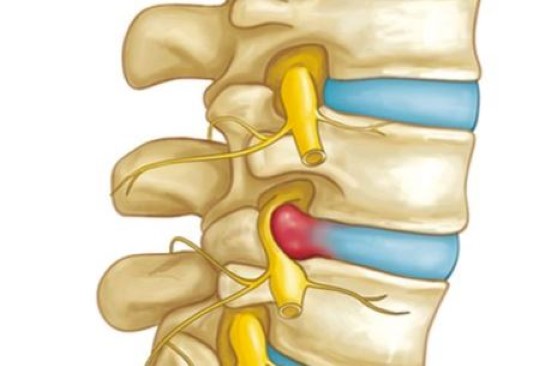
In the last blog we discussed what lumbar spine disc injuries are and how they happen. It all translates back to too much pressure being placed on a particular spinal level(s), causing the disc to prolapse (bulge) outwards resulting in pressure on neural structures.

Conventional therapy focuses on treating the injured level itself with the aim of reducing the size of the disc bulge. This can include rest, analgesics and anti inflammatories. While this approach may yield temporary symptomatic relief it is effectively doing nothing about THE ROOT CAUSE OF THE PROBLEM. More often than not the disc will repeatedly relapse a short while later because the dysfunction has not been corrected. It is effectively like putting a plaster over the problem.

CHIROPRACTIC TREATMENT CORRECTS WHAT IS CAUSING THE DISC TO PROLAPSE:

•By correcting and normalizing the spinal biomechanics (movement patterns) throughout the spine, your Chiropractor ensures that all load is distributed equally. Joints which are not moving normally can simply not function normally forcing adjacent levels to carry extra load, loading the discs excessively. Specific Chiropractic manipulation/mobilization corrects this dysfunction.

•Structural anomalies such as excessive scoliosis/kyphosis/lordosis are addressed and corrective exercises are given.

•Leg length inequalities are treated if within the ‘functional difference ‘ category but may be referred for orthotics if structural in nature.

•Muscle strength/flexibility imbalances are addressed and corrective exercises are given.

•Postural correction for standing/sitting/sleeping postures is vital and corrective advice regarding occupational/sporting actions invaluable.

All of the above puts Chiropractic at the forefront for the conservative treatment of lumbar spine disc injuries.The holistic approach prevents future relapses.Your Chiropractor will always refer you when necessary but always try conservative therapy first! Written by Dr. E Greyling

LUMBAR SPINE DISC INJURIES ARE ONE OF THE MOST COMMON SPINAL INJURIES SUFFERED GLOBALLY. IT IS ESTIMATED THAT UP TO 70 PERCENT OF THE WORLDS POPULATION WILL SUFFER SUCH AN INJURY AT SOME STAGE OF THEIR LIVES.

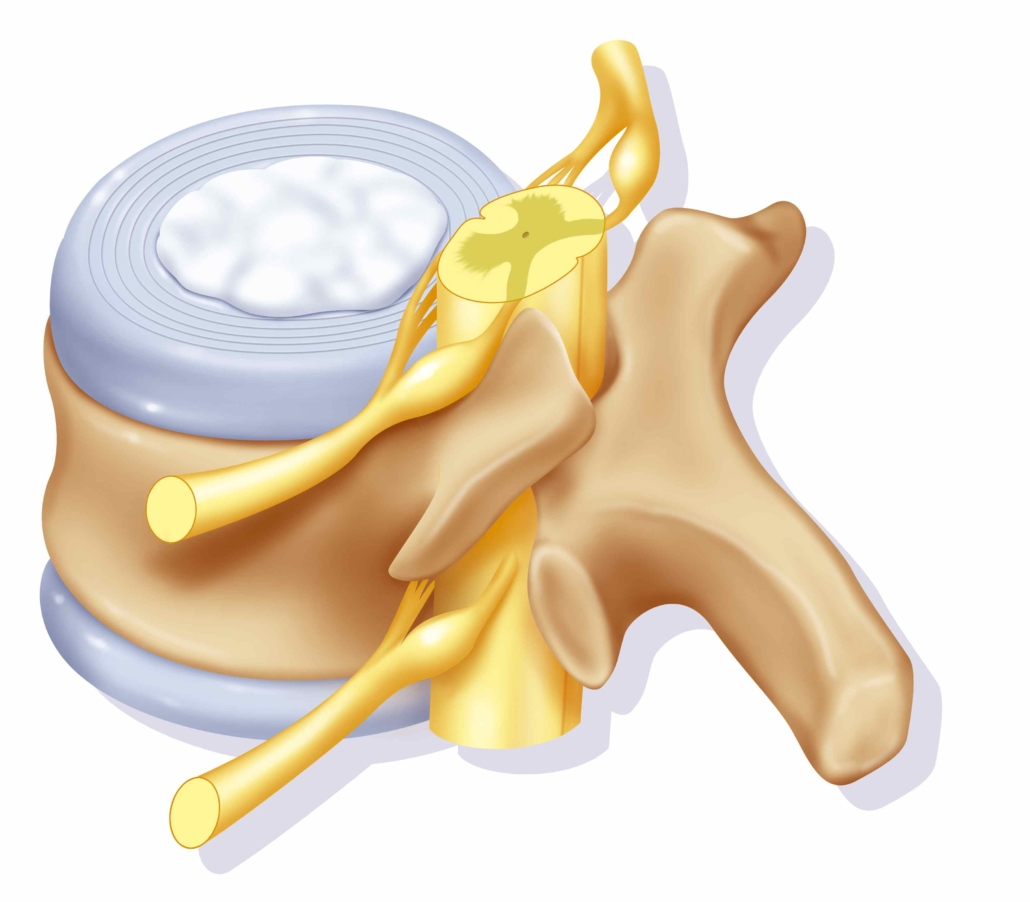
In between the lumbar vertebrae of the spine there are fibro-cartilaginous cushions or discs known as the intervertebral discs. Each disc is comprised of two parts, a tough outer cartilaginous ring known as the annulus fibrosis which encases a soft inner gelatinous core known as the nucleus pulposis.

Occasionally the nucleus pulposis (gelatinous core) will push outwards through the annulus fibrosis due to excessive pressure on that level. This causes the formation of a bulge or prolapse in the outer rim of the disc. If the prolapse is in the direction of the nerve root or spinal cord this can cause pressure on these structures resulting in neurological symptoms.

HOW DOES THIS HAPPEN?
Lumbar disc prolapses happen when there is excessive pressure on a particular spinal level(s). This can occur due to:
•Bad posture
•Bad habits and incorrect sporting actions
•Repetitive lifting injuries
•Weak core musculature
•Spinal anomalies such as scoliosis etc.
•Leg length inequality translating imbalance
up the spine.
•Spinal joint dysfunction etc

WHAT ARE THE SYMPTOMS OF A LUMBAR DISC PROLAPSE?
•Syptoms may /may not include back pain.
•Pain in the buttock or sciatic notch.
•Pain into one or both legs.
•Parasthesia or pins and needles into one or both legs.
•Numbness into one or both legs.
•Weakness into one or both legs usually in a
particular movement.

DO ANY OF THESE SYMPTOMS SOUND FAMILIAR? THEN STAY TUNED FOR NEXT WEEK’S BLOG WHERE WE WILL DISCUSS HOW CHIROPRACTIC TREATMENT OF A DISC INJURY DIFFERS FROM CONVENTIONAL THERAPY AND HOW WE CAN HELP YOU!- Written by DR E. Greyling

DOES IT LOOK OR FEEL AS IF ONE LEG IS LONGER THAN THE OTHER?

If this is indeed you, the most important thing to establish is whether the leg length discrepancy is structural or functional in nature.

Treatment simply cannot resume before the origin of the discrepancy has been established. Basic measurement with a measuring tape is a helpful tool to indicate whether there is a significant leg length difference and whether an X-ray is necessary. An X-ray is the only definitive and diagnostic way to truly measure a leg discrepancy.

STRUCTURAL LEG LENGTH DISCREPANCY implies a physically longer/shorter leg on the one side. This can be quite common post fracture or surgery, especially if the patient was still growing at the time. Hip and knee replacements can also cause this presentation. The important thing to note is that up to 80 percent of the population has a slight structural leg length discrepancy of less than 5mm. A difference of less than a 5mm margin is usually deemed negligible and in most cases WILL NOT WARRANT INSOLES OR HEEL LIFTS.

FUNCTIONAL LEG LENGTH DISCREPANCY implies that there is no (or only marginal) physical difference between leg lengths despite the one leg presenting notably longer. This occurs due to a dipping or a twisting of the pelvis on one side, causing a longer leg presentation. The patient may complain that ‘they look skew in the mirror’,’keep tripping over one foot,’ or ‘feel the need to hike one leg while walking.’ Lying these patients on their backs with legs totally extended and comparing the medial malleoli of the ankles, will often reveal a longer leg on one side. As mentioned, this is not necessarily physically or structurally so, hence, a functional difference.

Functional leg length discrepancies can be caused by a myriad of reasons including:
•Bad habits causing pelvic torsion or twisting of the pelvis such as :
Sitting with the legs crossed,
Standing with all the weight continually on one leg,
Continually sitting on an uneven surface, such as a wallet in the back pocket.
•Incorrect sporting/working actions favouring one side resulting in muscles being stronger around one side of the pelvis.
•Weakness/Inflexibility of the muscles around one side of the pelvis.
•Lumbar spine or sacro-iliac joint dysfunction resulting from bad posture/injury.
•Lumbar spine scoliosis.
•Foot problems such as excessive pronation on one side etc.

Thankfully Chiropractic specializes in identifying , diagnosing and treating the ROOT CAUSE OF THE PROBLEM. Your Chiropractor will go about restoring normal joint function , balancing uneven muscle strength/flexibility and correcting all actions potentially causing the problem. Prescribed exercises and home advice are vital for maintaining the treatment effect.

Every individual case is taken according to its merit -even in patients with significant leg length (over 5ml ) differences. However, if any patient does not show sustainable symptomatic progress or keeps relapsing despite corrective treatment -then it may be time for foot orthotic referral! This involves a slightly raised insole on the short leg side, it is extremely comfortable and the difference is often immediately notable. Larger structural differences over 10 ml are often referred immediately, especially in athletes.

So don’t panic if you suspect one leg to be longer than the other -odds are that it is a functional discrepancy and absolutely treatable! Written by Dr. E GREYLING