

Patients are often confused whether to use ice or heat and at what stage of an injury to apply them-getting this wrong could have adverse effects!
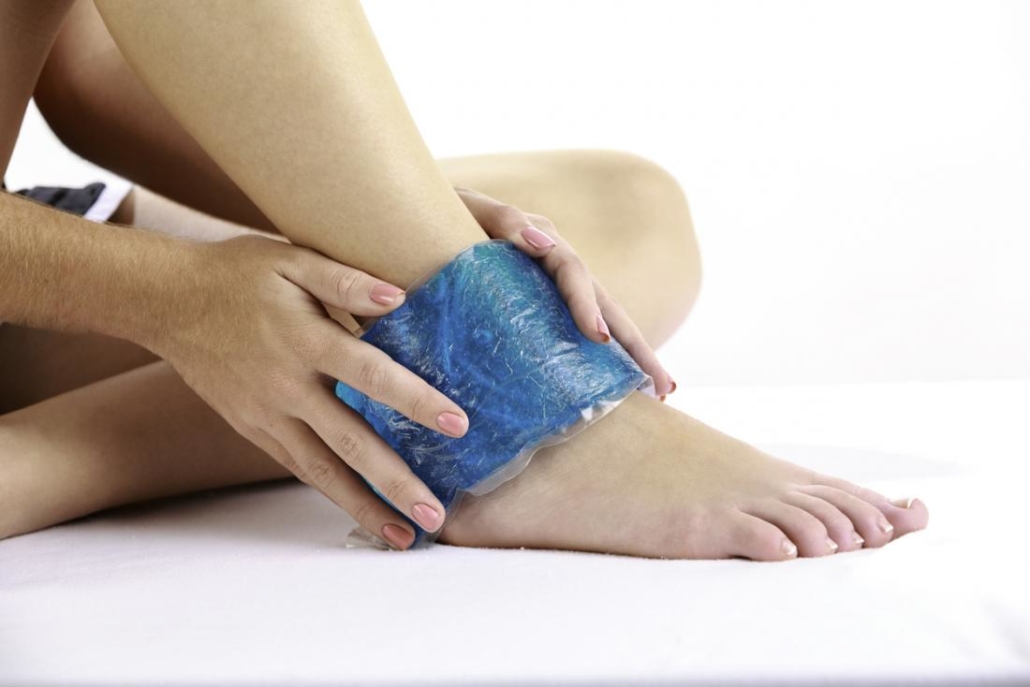
As a general rule ice is most effective in acute injury situations- where the injury has just occurred and for up to 72 hours thereafter (sprained joints, muscle tears, bumps, bruises.) Ice will reduce pain by minimizing inflammation due to the constriction of blood vessels, resulting in less pressure on nerve fibers and less tissue damage. Applying heat in this acute phase will only increase vasodilation of the blood vessels thus increasing blood flow, inflammation and pain! DO NOT APPLY HEAT TO ACUTE INJURIES!
Heat is generally applied after 72 hours and to more chronic (older) injuries and conditions. By increasing blood flow to the area it is often very effective in assisting healing and loosening tight tissues such as muscles, tendons and ligaments -thus freeing up stiff joints (frozen shoulder, chronic achilles tendinitis , chronic tennis elbow, chronic plantar fasciitis etc.) Heat can also provide relief in many arthritic conditions-if, however, you are suffering an acute arthritic episode and the joint is red and swollen(as in acute gout or rheumatoid arthritis) heat may best be avoided! It is generally safe to start applying heat after the acute phase of inflammation has passed(for any injury) to play it safe, three days after the initial injury.
Neither heat nor cold should be applied for longer than 10 minutes per application with at least a 1-hour break passing between each application. A minimum of 3 to 4 times a day may be adequate. Any application longer than 10 min may cause the body to register an ‘alarm’ at the part being treated and react with a reverse reaction.Ice/heat for too long may also cause local skin and tissue damage.

The above is a general rule of thumb and often the ideal intensity and amount of heat/cold will vary from individual to individual – depending on how they react symptomatically. LISTEN TO YOUR BODY AND IMMEDIATELY DISCONTINUE USE IF ANY AGGRAVATED OR ADVERSE SYMPTOMS BEGIN TO APPEAR.
Always place a thin cloth between the ice/heat pack and the skin to avoid skin irritation/frostbite or burns!
DO NOT USE ICE IN THE PRESENCE OF:
• A lowered body temperature, cold surroundings or a patient in shock
• Numbness or loss of sensation of the body part including peripheral neuropathies (such as diabetic neuropathy etc)
• Sympathetic dysfunction where there is an abnormality of the nerves controlling blood flow/sweat gland activity
• Vascular disease where the patient suffers bad peripheral blood flow (blood clots, Raynaud’s disease, vasulitis etc)
• Open wounds/blistered/burned skin
• if the patient is hyper-sensitive to cold (cold-induced urticaria where hives appear on the skin)
DO NOT USE HEAT IN THE PRESENCE OF:
• An elevated body temperature as in directly after exercise or during a fever
• Acute injury with inflammation for at least 72 hours
• Numbness or loss of sensation of the body part including peripheral neuropathies (such as diabetic neuropathy etc)
• Sympathetic dysfunction where there is an abnormality of the nerves controlling blood flow/sweat gland activity
• Open wounds/blistered/burned skin.
Remember that Ice and heat form only a part of the broader spectrum of treatment of any injury. Ice is generally applied as part of the P.O.L.I.C.E (protection, optimum loading, ice, compression, elevation) protocol for acute treatments. After 72 hours heat will form part of the rehabilitative phase. Corrective manipulation, muscle strengthening and balancing via specific exercises are vital and will prevent future relapse of the injury- ALWAYS TREAT THE CAUSE OF THE INJURY!

Hopefully this has answered some ambiguous questions around the ice vs heat debate! We will dive into more detail about the management of acute injuries at a later stage. So ice up, or keep it hot and remember-we’ve got your body and back! Written by Dr. Etienne Greyling


