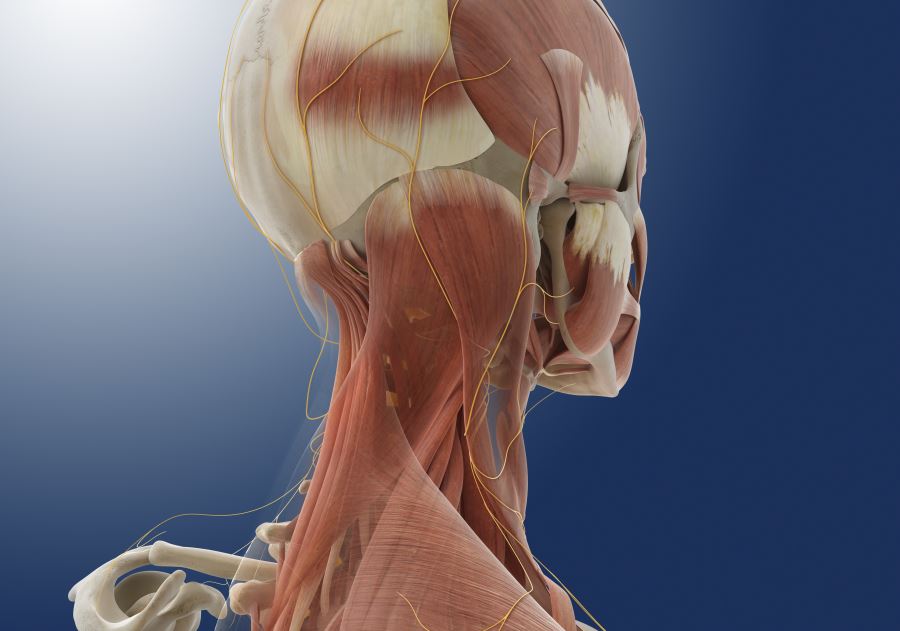
Are you drinking enough water daily?

Here are the benefits of doing so with special reference to the neuromusculoskeletal system.

With the earth consisting of 70 percent water and our bodies being 60 percent water it is easy to appreciate why water is so vital to life and the normal functioning thereof.

For the sake of this article, we will firstly consider the better known benefits of being properly hydrated, then consider the benefits on the neuromusculoskeletal (nerve, muscle, skeleton) system from a Chiropractic perspective!

THE BENEFITS OF STAYING PROPERLY HYDRATED INCLUDES THE MAINTAINING OF NORMAL FUNCTION IN ALL ORGANS!

BEING PROPERLY HYDRATED:

•Provides moisture to the skin and mucous membranes of the body, providing elasticity and lubrication to tissues. (including the lungs, helping prevent a host of respiratory disorders.)

•Attains and sustains normal blood volume and pressure, assisting in the prevention of cardiovascular disease.

•Assists in maintaining the correct viscosity of blood ensuring healthy blood cells and immune system.

•Maintains normal lymph flow and drainage.

•Maintains normal digestive system functioning by balancing ph levels thus preventing ulcers, constipation, and other GIT disorders.

•It Provides a massive cleansing effect on the ‘detoxyfing organs’ especially the kidneys and liver preventing failure and disease.

THE BENEFITS OF STAYING PROPERLY HYDRATED ON THE NEUROMUSCULOSKELETAL SYSTEM INCLUDE:

•Providing hydration to the joint cartilage (which is 60 percent water) preventing degeneration.

•Maintaining the synovial fluid volume in joints- which is literally the ‘oil’ to the joint which provides lubrication and nutrition to the cartilage.

•Maintaining bone density by assisting in the calcium uptake process preventing osteoporosis.

•Maintaining the hydration of your spinal discs thus maintaining their shock absorptive capacity and preventing disc degeneration.

•Maintaining normal muscle function by ensuring proper muscle cell firing and function-assisting in quicker recovery rate after injury/training.

•Maintaining normal neuro-transmission between the nerves throughout the body especially the brain.

•Maintaining optimal levels of endorphins and serotonin in the nervous system which helps break down chronic pain and depression pathways.

•Maintaining the cerebrospinal fluid volume which flows around the brain and spinal cord providing them with protection and nutrition.

•Assisting massively in weight loss by affecting hormonal systems and the perceptions of hunger -with weight reduction reducing stress on the joints.

MEDICALLY THE GENERAL CONSENSUS IS THAT AN AVERAGE OF 2 LITRES OF WATER THROUGHOUT THE DAY IS NECESSARY TO MAINTAIN NORMAL BODILY FUNCTION.

Please note that coffee, tea, fruit juices, and soft drinks DO NOT constitute water! They are packed with caffeine and sugars which act as a diuretic, actually dehydrating you!

Please also note that these are all LONG TERM BENEFITS of drinking enough water, flirting with this idea temporarily will achieve nothing. IT IS A CONSCIOUS LIFESTYLE CHANGE! Initially your body may even ‘object’ with a feeling of bloatedness, but persist a few days-once all the correct systems in your body and brain kick into normal function , YOU WILL BE CRAVING WATER.

Hopefully this has increased your awareness that the effects of drinking enough water are as far reaching as the neuromusculoskeletal system,and are even relevant in chronic pain and degenerative conditions. So here’s to H20, stay hydrated and remember, we’ve got your body and your back!

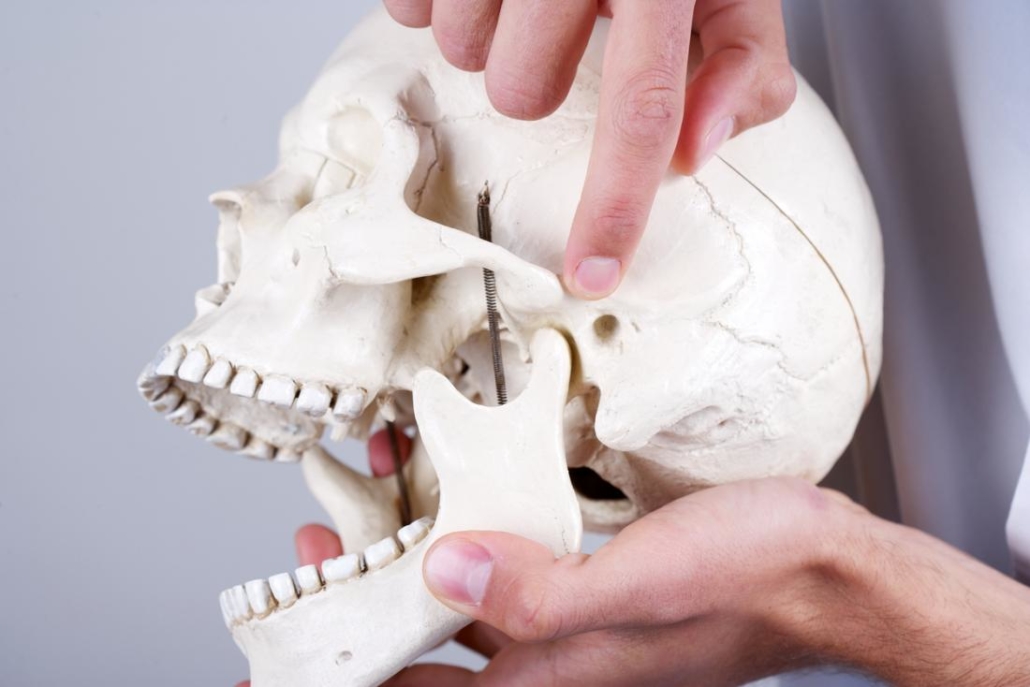
How Chiropractic can help heal your jaw pain!

Temporomandibular joint (TMJ) syndrome accounts for a large percentage of facial, temporal, and even ear pain.
The typical symptom characterizing TMJ syndrome is pain in the TMJ joint and surrounding muscles which is often aggravated by chewing. Patients may also experience a limitation in movement when opening the mouth or a clicking or locking sensation when doing so.

The TMJ joint connects the mandible(jawbone) to the skull. It is a sliding hinge joint which is dependant on a small intra-articular disc for its normal gliding motion. Occasionally this small disc may displace slightly resulting in painful locking or clicking symptoms. Wear and tear on the disc may also result from repetitive clenching or grinding of the teeth. The pain arises from direct irritation to the disc and the resultant muscle spasm of the jaw muscles (pterygoid, temporalis and masseter muscles especially).

Treatment is aimed at relieving tension on the joint (and disc) and surrounding jaw muscles by balancing the TMJ biomechanics (movement pattern). This is done by performing specific joint mobilization and muscle release techniques. These include TMJ mobilization/manipulation and myofascial trigger point therapy to the related muscles. Chiropractors will also treat the upper cervical spine which can influence the nerve supply the TMJ( via reflex mechanisms). Stretching and strengthening(balancing) exercises are also advised.

The most important consideration in treating TMJ syndrome is to address the cause of the problem. This can include direct trauma(as in boxing), various arthritides, muscle imbalance due to incorrect eating habits, grinding of the teeth whilst sleeping and habitual clenching of the jaw. Often releasing the tension on the TMJ and cognitive relaxation techniques with exercise can stop the teeth clenching and grinding habits.

Your Chiropractor will advise you if further medical/dental intervention is necessary, namely bite plates, arthritic medication or infiltrations etc-firstly however, always explore the more conservative avenues namely CHIROPRACTIC! Remember, we’ve got your back!

Articles written by Dr.Etienne Greyling

Has your tennis elbow not responded to conventional therapy or rest?

Could it be that you are not addressing the root cause of the problem? A Chiropractic approach could be the answer!

Lateral epicondylitis or tennis elbow is characterized by pain on the outside of the elbow which is typically reproduced by wrist flexion/extension whilst clenching the fist. It is a tendinitis of the extensor muscle attachment at the elbow which progresses to a tendinosis( degenerative) in more chronic cases. It is typically a repetitive overuse injury but can result from actions as innocuous as using your computers’ mouse excessively or even a bump to the elbow.

Lateral epicondylitis is a very slow healing injury which is why most treatments are centered around increasing blood flow to the area, namely with massage/cross friction/laser therapy/IFC/dry needling. In severe cases, even radiotherapy and blood infiltrations into the area are performed. But none of these treatments are sustainable without treating what is causing the problem, it will simply return on further usage-THIS IS WHERE CHIROPRACTIC COMES TO THE FORE!

Chiropractors will use the above mentioned modalities where necessary and obviously treat the painful part aswell. HOWEVER, Chiropractors recognize lateral epicondylits as being the weak spot, a symptom of what is going on around it. They will assess and treat the entire kinetic(movement) chain of the arm, which include all joints and muscles affecting the elbow. Full elbow range of motion includes a complex combination of moments which include the shoulder, elbow proper,radio-ulnar and wrist articulations. For example- to achieve full elbow extension, a degree of shoulder external rotation is necessary/to achieve full internal or external rotation at the elbow, full internal and external rotation at the wrist is vital. A loss of movement at ANY of the above articulations will DIRECTLY affect the elbow biomechanics, which WILL NOT HEAL properly/sustainably until the arm’s kinetic chain is fully corrected-THANKFULLY THIS IS CHIROPRACTORS’ SPECIALITY!

Your Chiropractor will also treat the thoracic and cervical spine which provides the nerve supply to the elbow -and correct any muscle imbalances which may be contributing to/causing the problem (in particular the strength ratio between the flexors and extensors of the wrist and elbow.)

Most importantly to prevent any future relapse, is to isolate and correct any incorrect actions. These may include poor sporting techniques or repetitive motion activities which may have caused/aggravated the problem in the first place.

This holistic approach gives Chiropractic a good success rate in the treatment of tennis elbow. Hopefully, this has given you a SUSTAINABLE ALTERNATIVE to conventional treatment and remember, we’ve got your back! (and your elbow)

Statistically up to a quarter of all headaches are termed cervicogenic (from the neck) in origin.

When considering how many variables are involved in causing headaches and with such a high incidence being cervicogenic, the neck should be one of the first variables to eliminate! Your Chiropractor will always first rule out any more serious causes such as blood pressure, infection and nervous system disorders before proceeding with treatment.

When considering the anatomy of the cervical spine and the sub-occipital triangle in particular it becomes obvious why so many headaches originate from the neck.

The greater and lesser occipital nerves originate between the C1/C2 vertebrae. They then course upwards onto the back of the head and behind the temporal(temple) areas. Any joint dysfunction between the occiput (skull)/C1/C2/C3 vertebrae will cause spasm and atrophy of the suboccipital muscles and reflex irritation to the nerve roots, radiating pain into the head. The pain is very often further reaching than this direct nerve distribution and can refer to the temporal(temple), frontal(forehead) and orbital(eye) areas too. The mechanism responsible for this pain referral occurs due to a merger between the spinal nerves from C1/2/3 and a branch of the trigeminal nerve. Via this merger in the trigeminocervical nucleus of the upper spinal cord-cervicogenic pain can travel in the distribution of the trigeminal nerve to the above mentioned regions of the face.

According to The International Journal of Sports Physical Therapy, cervicogenic headaches are characterized by palpable upper cervical joint dysfunction and suboccipital tenderness. This may also manifest as a limited range of motion which can be measured by objective orthopedic testing. As anyone can appreciate, there is no magic pill that can correct the above mentioned dysfunction-and as per explanations in drchiro’s previous blogs this is EXACTLY what Chiropractors specialize in treating!

Your Chiropractor will go about a process of treating THE CAUSE of the dysfunction. This will include postural correction, trigger point release with strengthening of weak cervical muscles, corrective mobilization and manipulation of the dysfunctional vertebrae -thus NORMALIZING THE CERVICAL SPINE BIOMECHANICS.

So if conventional treatment is not helping or your headache symptoms keep returning please consider the above. Headaches are one of the most common problems seen in Chiropractors’ rooms, with such a high rate of incidence being cervicogenic in origin- shouldn’t Chiropractic be one of your first points of call? And remember we got your back!

What are the effects of chiropractic manipulation on the body?

Although the effects are way further reaching than in this article, let’s keep it basic and at the joint level for now! To understand the effects of Chiropractic manipulation on the body it is first of all important to understand the effects joint immobilization has on the body as this is what we aim to correct.

We have all either had or witnessed someone with a broken arm in a cast before. We all know, that when the cast is removed that arm is thin, weak and wasted away. This is called DISUSE ATROPHY and the collective effects are known as the EFFECTS OF IMMOBILIZATION. This happens purely because the joint was not being used properly for a time, albeit even temporarily.

Your body, on every level, works on the principle of USE IT OR LOSE IT. When a joint is not moving properly through its full range of motion it is subject to the above effects which include muscle wasting, tendinous and ligamentous shortening, vascular and lymphatic stasis with nerve atrophy. These changes can be visible as early as one week after immobilization on MRI scan. This dysfunctional state is classified as the first phase of degeneration and unless corrected, will progressively escalate into structural arthritic changes. This process applies to any joint in the body including the spine where the spinal joints become blocked or dysfunctional in the stressed or injured areas.

Thankfully Chiropractic specializes in the testing, locating and correcting of these dysfunctional joints throughout the spine and body-restoring normal biomechanics. By doing so, Chiropractors halt the spiral of joint degeneration and aim to put the body in a POSITIVE PAIN-FREE CYCLE. This is achieved by very specific joint mobilization/manipulation, muscle release techniques and rehabilitative exercise addressing weaknesses and imbalances.

By restoring normal joint motion with CHIROPRACTIC MANIPULATION the effects of immobilization can be reversed and you can continue on your journey to PAINFREE WELLNESS.

So follow your maintenance protocol advised by your Chiropractor and remember- we’ve got your back!

Is clicking your own joints a healthy habit? What is the difference when the chiropractor does it?

This is a question I get asked on a daily basis with self-manipulation forming a part of many patients’ daily repertoire. They will describe it as ‘instant relief’ and that they feel ‘they have to do it.’

The problem is that MANIPULATION LOOSENS JOINTS and absolutely any joint in the body can cavitate or click-the audible click is nothing more than the collapse of a negative pressure gas pocket found in every joint cavity. There is no such thing as a joint being ‘in or out.’ Consider a chain (of joints) with one or more weak links, when you non-specifically twist that chain where does the movement go? The movement logically isolates to the weak links. With (non-specific) self-manipulation you are clicking the same weak links all the time further loosening them!

This is why your Chiropractor will always first analyze the individual joint movement patterns (or biomechanics) very carefully and will mobilize/manipulate ONLY the joint levels which have become blocked or dysfunctional in their movement.

This is a very specific procedure applied ONLY to the dysfunctional levels and in the direction of the blockage. This is aimed at normalizing those joints’ movement patterns. Joints moving normally and especially joints moving too much (weak links) are absolutely avoided during chiropractic manipulation. Joints which are already moving excessively are rather given specific muscular strengthening to help stabilize those levels. By doing the above the spinal movement patterns become balanced once again resulting in an optimal functioning environment.

Unfortunately, self or non-specific manipulation will eventually result in chronic irritation to the ‘loose’ joints with patients describing that ‘it won’t click anymore’. This is because the joint has become chronically inflamed which is the pre-cursor to ARTHRITIC CHANGE. Please note that the above is applicable to unnecessarily clicking ANY joint in the body.

So if you are stuck in the habit of clicking your own joints please consider the long term damage you are doing, the relief you may be getting from doing so is TEMPORARY. Visit your chiropractor to have the spinal movements specifically balanced and do your rehabilitative exercise. This will result in permanent, SUSTAINABLE RELIEF!

If you have any questions, please send them through to drchiro.co.za and don’t forget we’ve got your back!

Training through the pain debunked

Pain is the body’s alarm system telling us that something is wrong and the body’s way of saying stop!

How does your body enforce this?
The principle of pain inhibition applies to any injured structure in the body. This means that the nociceptive ( pain ) nerve fibers send a pain signal to the spinal cord which in turn sends a reflex motor signal back to the injured part to shut the muscles down. In other words, the painful body part is rendered weak, thus CANNOT BE STRENGTHENED WHILE STILL PAINFUL. It is your body’s way of protecting itself, allowing it time to heal.

A good example of this is a sprained ankle which all of us have experienced. Everyone knows that trying to stand on a sprained ankle is impossible, it automatically gives way- this reflex is completely out of our voluntary control. This is pain inhibition in action. The same is obviously true for ANY joint/muscle. We can also all appreciate how running on a sprained ankle will only worsen the injury, so how is this different from training through ANY other injury? YOU WILL ONLY MAKE IT WORSE!

If you’re fooling yourself into believing you’re feeling better when training through the pain, odds are you are just compensating with other muscle groups-THE INJURED MUSCLE IS NOT WORKING PROPERLY! This will result in further complications down the line and will invariably result in a far more complex injury involving multiple structures. Tendinitis is typically painful as you start training then may feel temporarily better during the exercise, that is, until you cool down-the pain returns, with more damage having been done.

TREAT WHAT IS CAUSING THE PROBLEM!


Always get your injury assessed by a professional and correct the origin of the problem. This can be anything from poor pelvic, spinal or peripheral joint biomechanics to muscle imbalance. Have them guide you through the rehabilitative process to avoid relapse and permanent dysfunction. ALWAYS GIVE THE INJURY APPROPRIATE TIME TO HEAL!

Hopefully, this will change your attitude to injury and remember DONT TRAIN THROUGH THE PAIN, FIX THE PROBLEM! Please feel free to forward any questions to drchiro.co.za- and remember, we’ve got your back!

What is the correct office posture to prevent spinal dysfunction?

As mentioned in last week’s blog, up to 60 percent of all spinal dysfunction is caused by repetitive microtrauma. Considering how many hours we spend sitting at desks, the cumulative stress becomes massive over time. But wait, before going off and buying an expensive chair, please first consider that it is HOW YOU SIT IN THE CHAIR that makes all the difference to your spine.

Here are some vital pointers to help reduce stress and add to your spinal well-being.

1) Always wedge your buttock into the CORNER of the chair, this will force your spine into an upright position passively.

2) Always make sure your chair has a backrest and then USE THE BACKREST. Sitting for prolonged periods should be a passive position. Sitting forward towards the edge of your chair (away from the backrest ) means you are using muscular effort, without you even knowing it.

Over longer periods of unsupported sitting the spinal muscles WILL fatigue which loads the spinal joints, which WILL become dysfunctional over time. Using the backrest deflects the pressure OFF the spine.

It is also a myth, that the backrest needs to be 90 degrees upright. If you can, recline the backrest slightly backward a FURTHER 10 to 15-degree angle, the backrest will immediately absorb more of your body weight at this angle, thus further deflecting pressure off the spine.

3) A great way to remember this is“TABLE-NAVEL”. This will assist in holding you upright thus reinforcing the passive position. The height of the desk should also be at least navel height or even better, slightly higher-NEVER LOWER.

4) Use your desktop as your armrests. This will further aid the passively upright posture. If the armrests block you from moving all the way forward to the table (table-navel), rather take them off. You are not going to use them while sitting at the desk anyway!

5) The top of your computer screen should be at your eye level when looking straight ahead. If you are using a laptop it will help to prop it up on a laptop stand to aid this angle as far as possible.

Although standing desktop tables, knee chairs or sitting on exercise balls can be of value for limited or prescribed usage, please remember that they are IN NO WAY A PERMANENT REPLACEMENT FOR A NORMAL CHAIR. These positions and postures are not biomechanically sustainable for longer periods of time. Again, with no back support the spinal muscles WILL fatigue, the spinal joints WILL take the strain and this WILL eventually cause joint dysfunction. 

I do not recommend using the above-mentioned apparatus for more than 45min, per every two hours of normal sitting. They serve as a posture break, nothing more! If your objective for using the above is for strengthening, then I suggest that you rather do proper exercise.

Small adaptions such as a footrest can be helpful for short people who’s feet are unable to reach the floor. A headrest will also assist people struggling to maintain a good upright neck posture, though practice and exercise is a far better solution for this.

Remember to get up and WALK AROUND for a few minutes every hour if this is possible, this will aid blood flow, lymph drainage as well as stimulate mental awareness.

Please note that If the above pointers cannot be met by the chair that you are currently using then it may be time to go shopping for a new one. I can highly recommend the ERGOTHERAPY range which features adaptable variations, which you can also customize to your height and adjust for other features. Contact us directly for further information regarding this.

I trust this will aid your office posture awareness, and please feel free to forward any questions to drchiro.co.za- and remember, we’ve got your back!